

Park · Montreal · ⭐ 9.3/10 · 7719 reviews · updated: 2026-08-04 15:54:41
Address: 3400 Boul des Trinitaires, Montréal, QC H4E 4J3, Канада
Parc Angrignon — the English garden of the Sud-Ouest
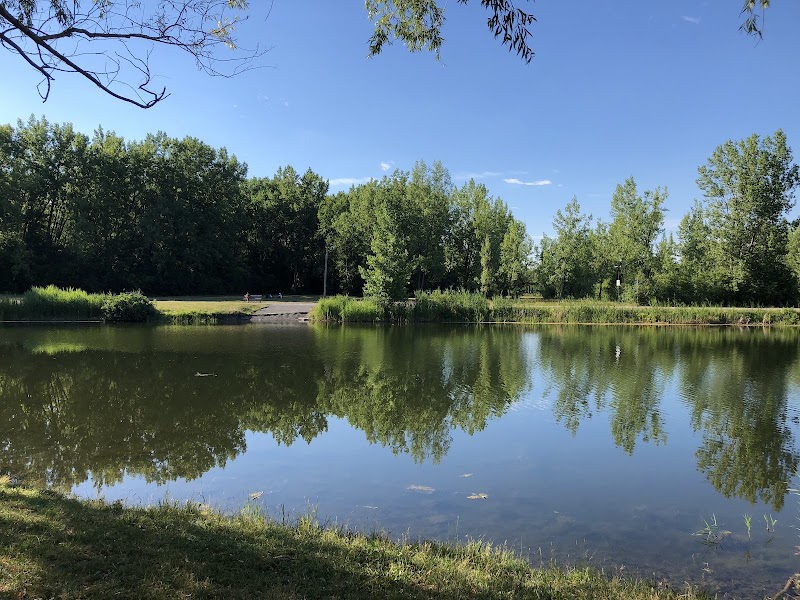
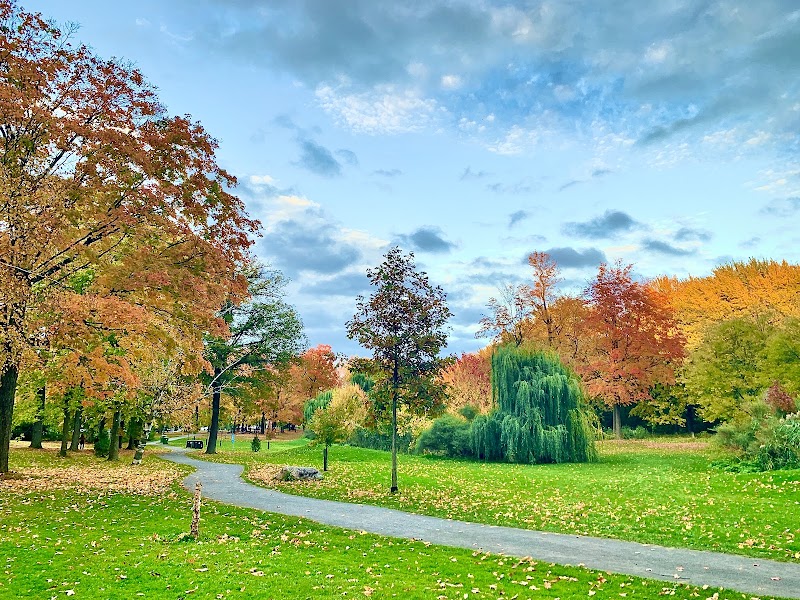
Ninety-seven hectares, twenty thousand trees and a long winding body of water about 1.1 kilometres end to end: Parc Angrignon is the great lung of Montreal’s Sud-Ouest, and the only park in the city that genuinely has the look of a nineteenth-century English landscape garden. Nothing in it is straight. The paths meander, wooded masses hide what comes next, the water appears and disappears between the trees, and a woodland light reigns over almost the whole site. It is a park where you walk without knowing exactly where you are going — and that is precisely the intended effect.
Highlights
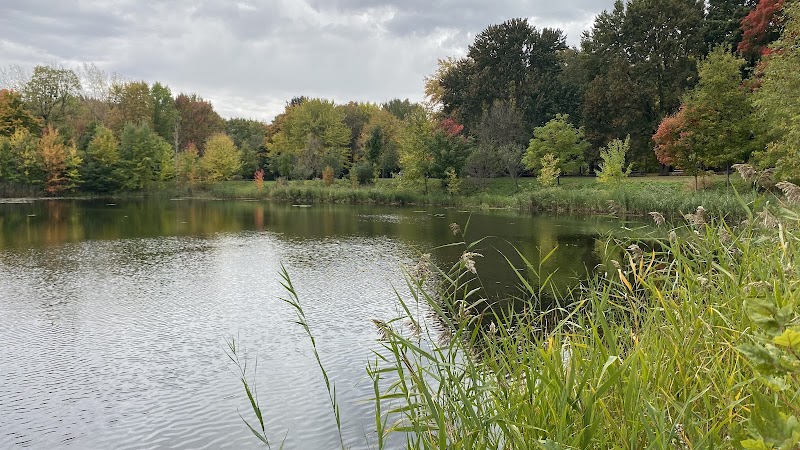
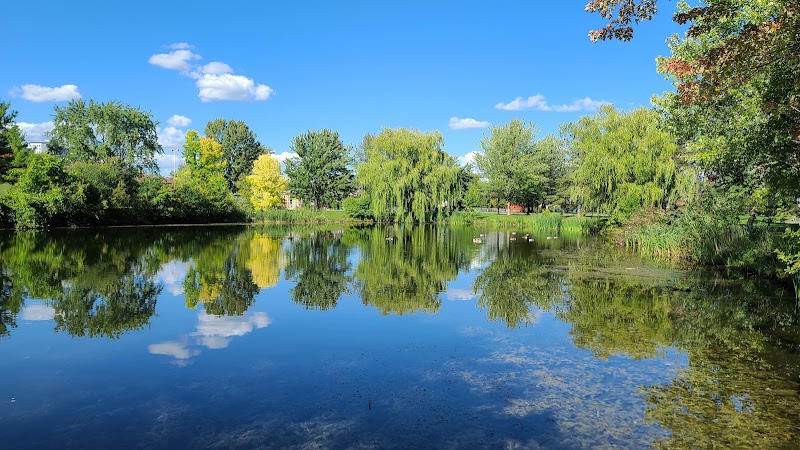
- The lake — a body of water stretched out over about 1.1 kilometres, linked to a series of ponds by a set of cascades and fringed with cattails; it gives the park its spine and its mirror.
- The forest of 20,000 trees — a mature maple stand in the southwest sector and, in the northeast, a planting of varied species around the artificial basin: tree cover that is rare for an urban park of this size.
- Angrignon métro station — the terminus of the green line, opened on September 3, 1978, designed by the architect Jean-Louis Beaulieu: platforms less than five metres below ground, an immense glass roof and glazed walls opening straight onto the park. It won its designer an Ordre des architectes du Québec award the following year.
- The trail network — roughly ten kilometres of walking paths, of which about 1.6 kilometres are lit for evening walks and 2 kilometres are usable by bike and on inline skates.
- The cascades between the basins — the waterworks that link the pools and animate the landscape: this is where the photographers gather in autumn.
- The park’s wildlife — herons, teal, chickadees, eastern screech owls and even muskellunge in the water; a 48-hour bioblitz recorded 93 animal species here.
What’s inside
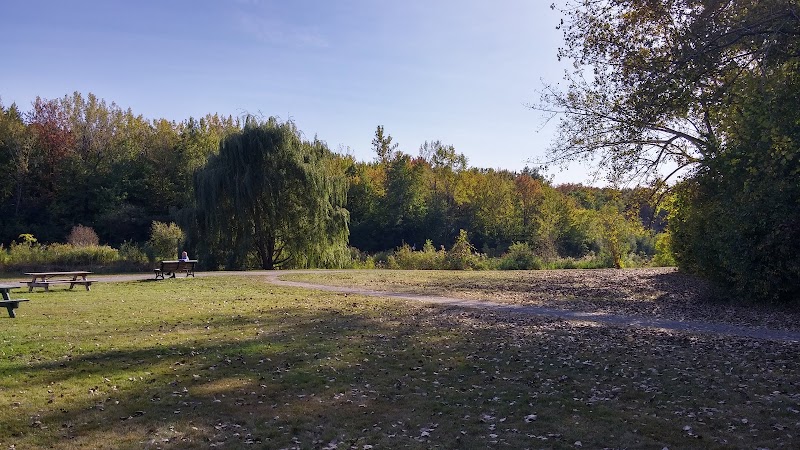
Angrignon is a nature park before it is a facilities park: most of its area is wooded or under water, and the installations slip around the edges so as not to break the landscape. You come here first of all to walk, to sit and to look.
- A lake of about 1.1 kilometres and several interconnected ponds, ringed by shoreline trails.
- Play structures for children, including an area designed specifically for toddlers.
- A fenced dog run, heavily used by residents of Ville-Émard and the neighbouring areas.
- A community garden, picnic areas and barbecue spots.
- Drinking fountains, public washrooms and parking lots — some charged, some free.
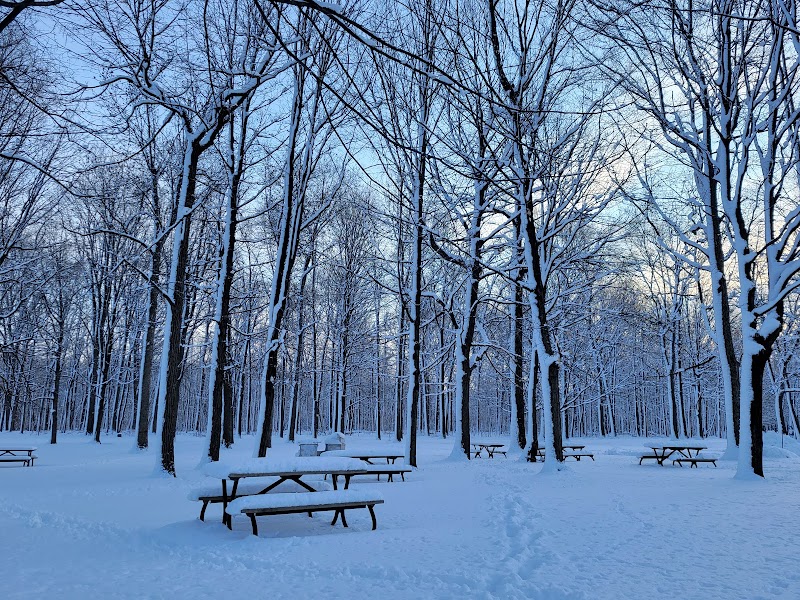
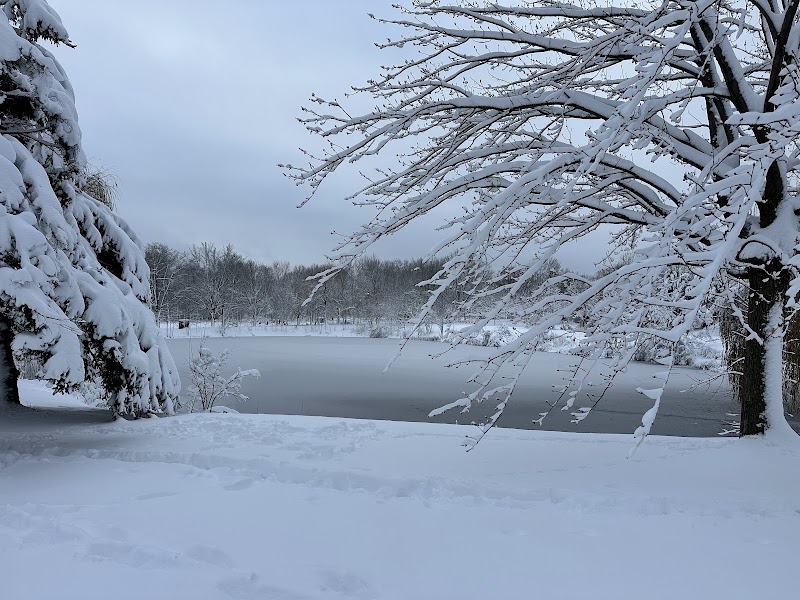
- In winter: classic cross-country ski trails of 3 km and 4.6 km, a skate-ski track of about 2.9 km, an easy snowshoe trail of about 3 km and a sliding hill.
What to do and who it’s for
- Walkers — ten kilometres of winding trails, with no severe grades, let you put together loops from half an hour to two hours.
- Families — play structures, a toddler area, big clearings and a lap of the lake short enough for small legs.
- Birders and naturalists — the diversity turned up by the bioblitz, the herons at the water’s edge and the owls in the undergrowth make Angrignon a serious observation site inside the city.
- Cross-country skiers and snowshoers — two classic trails, a skate-ski track and a snowshoe trail through real forest cover, five minutes from a métro terminus.
- Photographers — the water, the cascades, the morning mist and the maple stand in October: this is probably the most photogenic park in the Sud-Ouest.
- Dog owners — a dedicated fenced run, plus kilometres of paths for walking on leash.
Getting there and practicalities
The park is in the Sud-Ouest borough, in the western part of the Ville-Émard neighbourhood. It has one of the simplest approaches in the entire Montreal network: Angrignon station, the terminus of the green line, is literally built inside the park, and you go from platform to trail in a few dozen steps. Several bus routes converge on the adjacent terminus, which makes the site reachable from the whole southwest of the island, and bike paths lead here as well. Entry to the park is open and free; some parking lots are charged and others are not, and only supervised activities or equipment rentals carry a fee. Allow about an hour to walk around the water, two to three hours to explore the full trail network, and half a day if you are coming to ski or to snowshoe.
When to visit
Spring is short but spectacular: the thaw fills the basins, the cascades pick up volume, and migrating birds stop on the water before heading north again. Summer settles in a dense shade — this is one of the few Montreal parks where you can walk a full hour with almost no direct sun — and the clearings fill with picnics and barbecues on weekends. Autumn is the peak of the year: the maple stand in the southwest sector turns red, the trees reflect in the lake, and the morning mist over the water is on its own worth the trip. Winter turns the park into a small outdoor centre: two classic cross-country trails of 3 km and 4.6 km, a skate-ski track of about 2.9 km, an easy snowshoe trail of about 3 km, a sliding hill, and skating, which remains one of the site’s signature activities. Angrignon’s great winter advantage is access: you step off the métro and you are already in the snow, with no car and no long approach.
Worth knowing
The park is named after Jean-Baptiste-Arthur Angrignon (1875-1948), alderman for the Saint-Paul ward from 1921 to 1934 and a member of the city’s executive committee from 1928 to 1930. The municipality began leasing the land in 1926 and acquired it in 1928, and the park’s name was already fixed in 1927 — but the landscaping itself would take decades. Angrignon is in fact the great unfinished project of Montreal’s parks: as early as 1944, city planners proposed putting a zoological garden here, and in 1954 the American firm McFadzean, Everly and Associates drew up animal enclosures spread over some 250 acres, with a very ambitious symbolic architecture. The zoo never came to be in the form that was planned. One very real trace of it survives, however: from the late 1960s on, the animals from the Jardin des merveilles at Parc La Fontaine spent their winters at Angrignon, and when the Jardin closed for good in the autumn of 1988, part of its menagerie stayed on here until the end of the decade. The park also long housed a small farm and a children’s play fort, both closed today. What finally took hold in place of the zoo was the landscape itself: an English-style garden with its twenty thousand trees, its wooded masses, its long body of water and its cascades. One last striking element, this one underground: Angrignon station, opened on September 3, 1978 with the extension of the green line, was designed by Jean-Louis Beaulieu so that natural light would reach the platforms — a continuous glass roof and glazed walls giving onto the park, in a station so shallow that you can see the trees from the train.
Visitor tips
- Walk around the water in the direction that brings you back toward the cascades at the end of the loop; that is where the late-day light is best.
- The northeast sector, around the basin, is the busiest: for quiet and for birds, head instead toward the maple stand in the southwest.
- In the evening, stay on the lit stretch of about 1.6 kilometres: the rest of the trail network has no lighting.
Questions and answers
Is access to the park free? Yes. Entry to Parc Angrignon is open and free. Some of the parking lots are charged and others are not; only supervised activities and equipment rentals carry a fee.
How do you get there by transit? It is one of the easiest parks to reach in Montreal: Angrignon station, the terminus of the green line, is built inside the park itself, and a bus terminus sits right beside it.
Can you swim in the lake? No. The body of water, about 1.1 kilometres long, is a landscape feature with cascades and linked ponds; you can walk right around it, but swimming is not allowed.
Was there really a zoo here? Not in the form that was planned. A zoological garden was proposed as early as 1944 and drawn up in 1954, but it was never completed; the animals from the Jardin des merveilles at Parc La Fontaine did winter here from the late 1960s on, however, and some stayed after the Jardin closed in 1988.
What winter activities are there on site? Two classic cross-country trails of 3 km and 4.6 km, a skate-ski track of about 2.9 km, an easy snowshoe trail of about 3 km, a sliding hill, and skating, one of the park’s great classics.
Is the park suitable for children? Yes. It has play structures, an area designed specifically for toddlers, wide clearings and a lap of the water short enough to be done in full with young walkers.
Can you watch wildlife here? Yes, and seriously so: herons, teal, chickadees, eastern screech owls, rabbits and even muskellunge in the water. A 48-hour rapid inventory counted 93 animal species.
How much time should I allow? An hour to walk around the water, two to three hours to cover the whole trail network, half a day in winter if you are skiing or snowshoeing.
Photos
Show 1 more photos
Visitor reviews
Reviews last updated: 2026-08-04 15:54:41
Data is refreshed monthly. Sources: montreal-name.com and editorial picks based on reviews.
Гарний парк, для прогулянок і не тільки.
Великий затишний парк з озерами.
Чудовий великій парк, є багато рослин та білочок
Супер простір! Багато місця, водойма, благоустрій для відпочинку. Є такі місця наче справжній ліс! Багато пташок, зелені. Чисто! Рекомендую для відпочинку!