

Park · Montreal · ⭐ 9.7/10 · 26751 reviews · updated: 2026-08-04 15:54:39
Address: 1260 Chem. Remembrance, Montréal, QC H3H 1A2, Канада
Parc du Mont-Royal — Olmsted’s mountain in the middle of the city
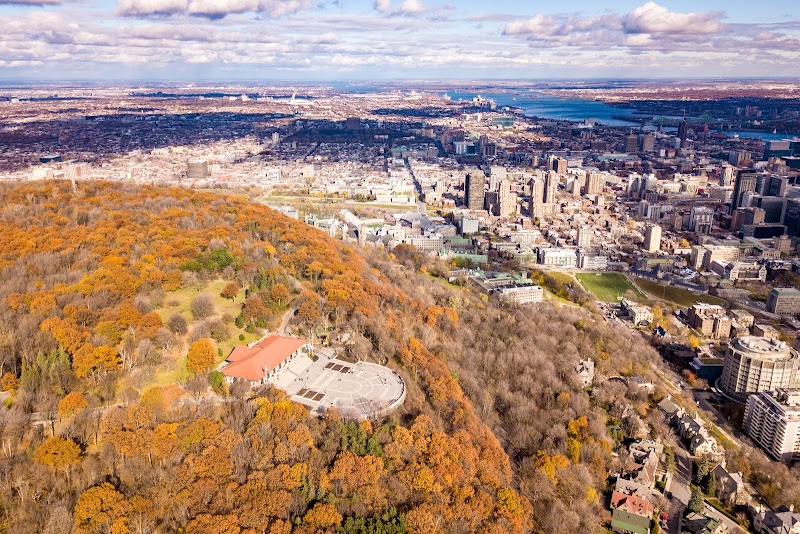
Montreal built itself around a mountain, and the mountain stayed a park. Spread over a little more than two hundred hectares, Parc du Mont-Royal wraps around the main summit of Mount Royal, 233 metres up, and gives the city an unbroken block of woodland where what you hear is crows rather than traffic. It was laid out by Frederick Law Olmsted, the father of landscape architecture in North America, and it was never conceived as a pleasure garden: Olmsted wanted the climb itself to be the show, wanted the walker to pass through a succession of scenes — clearing, rock face, undergrowth, water, panorama — and arrive at the top calmed. A hundred and fifty years after it opened, the programme still holds.
Highlights
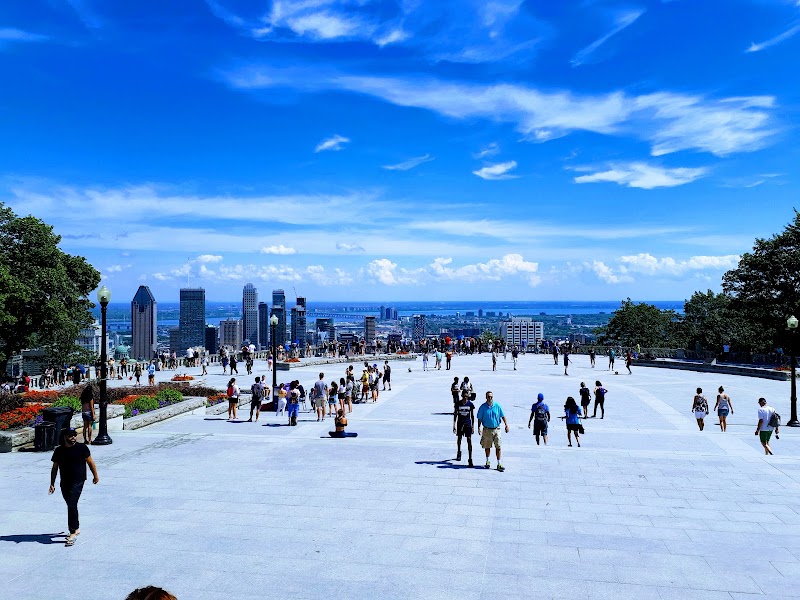
- The Kondiaronk Belvedere — the most photographed terrace in Montreal, hanging above downtown, the St. Lawrence River and, on a clear day, the Montérégian Hills. Since June 21, 1997 it has carried the name of the Wendat chief Kondiaronk, an architect of the Great Peace of Montreal of 1701.
- The Mount Royal Chalet — a 1932 pavilion by Aristide Beaugrand-Champagne, put up as a make-work project during the Depression. Its great hall holds seventeen mural paintings recounting episodes from the city’s history, commissioned from painters including Paul-Émile Borduas, Marc-Aurèle Fortin and Adrien Hébert.
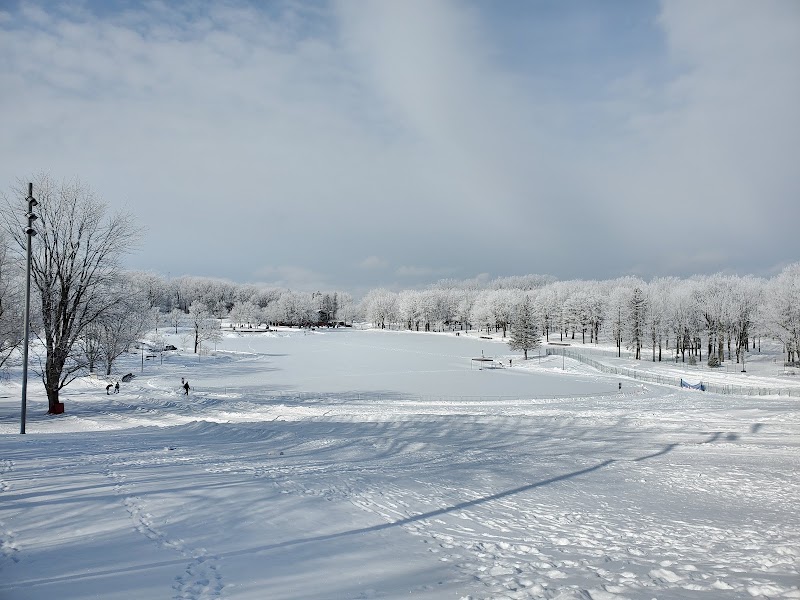
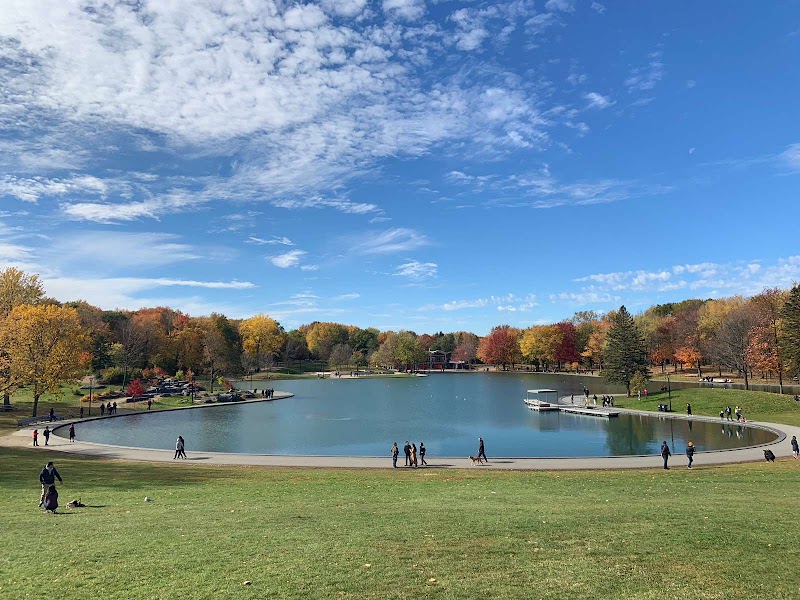
- Beaver Lake — an artificial basin dug in 1938 by the landscape architect Frederick Todd in what had been a swamp; remains of beaver dams uncovered during the work gave it its name. Pedal boats in summer, a refrigerated rink in winter since 2006.
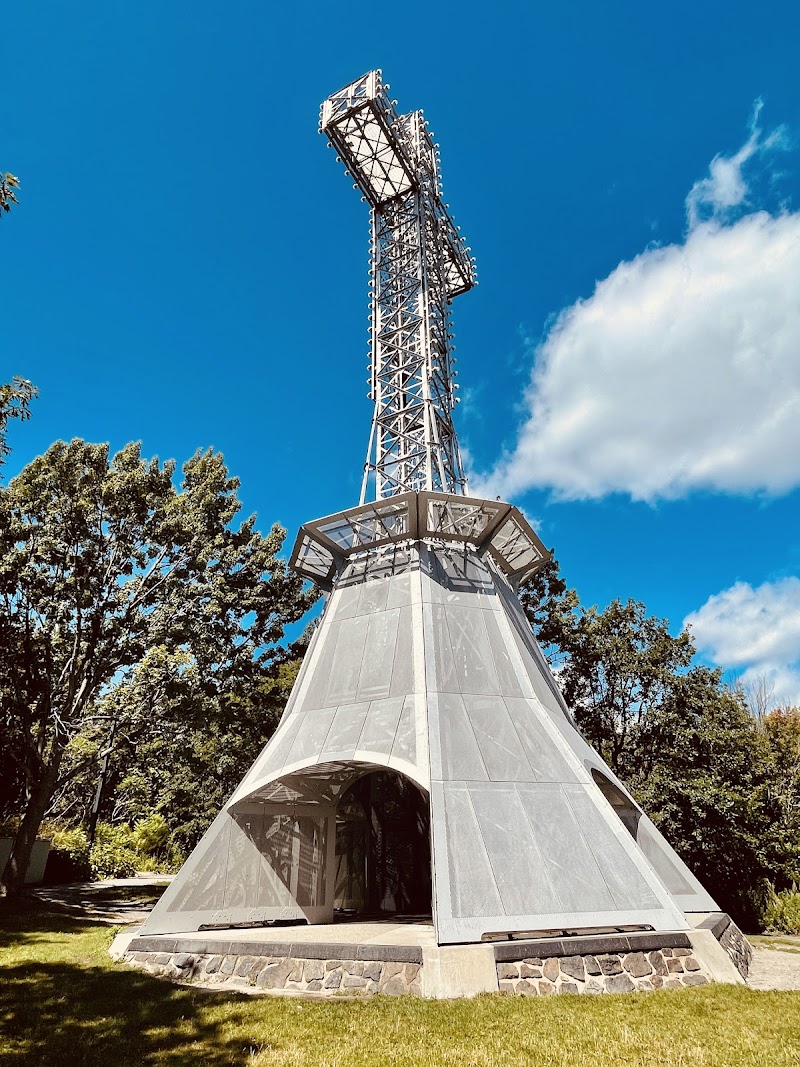
- The Mount Royal cross — some thirty metres of steel planted on the eastern flank, lit for the first time on Christmas Eve 1924. Since May 15, 1992, a fibre-optic system has made it possible to change its colour.
- Olmsted Road — the great switchbacking promenade, about eight kilometres of gravel at a very gentle grade, traced so that the mountain would be climbed slowly and stay accessible to everyone, wheelchairs included.
- The tam-tams — since 1978, on the initiative of the percussionist Michel Séguin, drummers have gathered on Sundays at the foot of the Sir George-Étienne Cartier monument and played from early afternoon until dusk.
What’s inside
The park is a massif, not a lawn: maple and oak forest, rocky escarpments, secondary trails, and a few heritage buildings scattered along the way. The Beaver Lake sector, open and sunny, serves as the family heart; the chalet sector, stony and panoramic, serves as the city’s balcony; between the two, the forest takes back its rights for kilometres.
- Two built lookouts: the Kondiaronk Belvedere, turned toward downtown, and the Camillien-Houde Belvedere, open onto the east end of the island and Mont Saint-Bruno.
- The Beaver Lake Pavilion, built between 1955 and 1958 to plans by Hazen Sise and Guy Desbarats — undulating roof and tall windows — restored and awarded a prize of excellence by the Ordre des architectes du Québec in 2007.
- Smith House, built in 1858 for the merchant Hosea Ballou Smith, today a welcome and interpretation centre run by Les amis de la montagne, founded in 1986.
- A protected floristic habitat of 29,800 square metres, created in 2005, home to mayapple, trilliums and ostrich fern among others.
- Playgrounds, a water play area, picnic tables and charcoal barbecue spots in the lake sector.
- A complete winter network: cross-country ski trails at several levels, a snowshoe trail of about three kilometres, sliding runs and the refrigerated rink.
What to do and who it’s for
- The visitor passing through — go straight up to the Kondiaronk Belvedere: twenty minutes there and you understand the geography of Montreal, from the river and the bridges out to the towers downtown.
- Families with children — the Beaver Lake sector puts everything in one spot: pedal boats, playground, water games, the sliding hill in winter, food at the pavilion.
- Walkers and runners — Olmsted Road offers a steady grade and a forgiving surface; the secondary trails add elevation and roots.
- History and architecture buffs — the 1932 chalet and its murals, Smith House, the cross, the monuments: the park reads like twentieth-century Montreal in condensed form.
- Naturalists — a mature maple stand, migrating birds in spring, red fox and great horned owl reported on the mountain, annual plant inventories.
- Winter sports people — cross-country skiing, snowshoeing and skating in the same park, with equipment rented on site by Les amis de la montagne.
Getting there and practicalities
The park straddles three boroughs — Ville-Marie, Outremont and Côte-des-Neiges–Notre-Dame-de-Grâce — which is why you can get into it from several sides. The simplest way from downtown: the orange line to Mont-Royal station, then the bus that crosses the mountain and serves the lake sector. From the green line, Peel and Guy-Concordia stations put the foot of the south slope within walking distance, but then you have the long staircases to climb: that is the short, sporty route. On the north flank, Édouard-Montpetit station, served by the blue line and by the REM, opens onto the university side. Access to the park is free and there is neither ticket booth nor gate; only the parking lots are charged, and they fill early on sunny weekends. The park is open every day from 6 a.m. to midnight. Allow two to three hours for a round trip taking in the belvedere and the lake, half a day if you want to walk Olmsted Road end to end.
When to visit
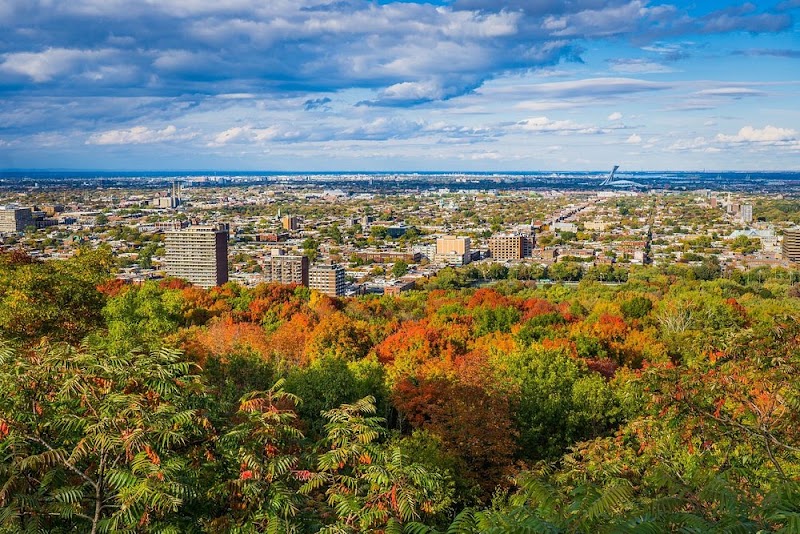
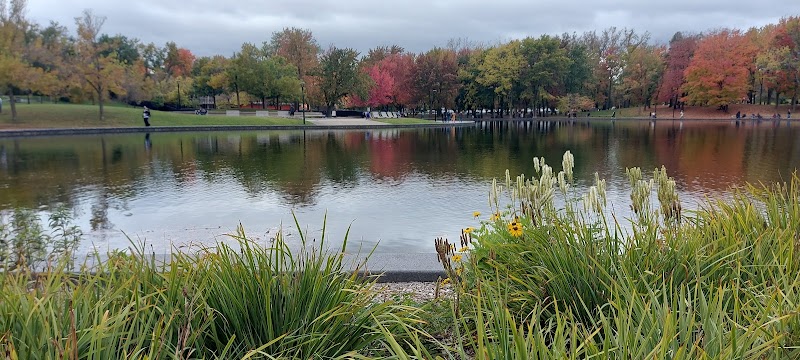
In spring the mountain declares itself before the rest of the city: spring ephemerals bloom under trees that are still bare, migrants pass through in numbers, and melting snow turns some trails to mud — closed shoes required. Summer brings the dense shade of the maple stand, pedal boats on the lake, picnics and the Sunday tam-tams; it is also the busiest season, and the belvedere at sunset is shared with a lot of people. Autumn is the park’s best card: between late September and mid-October the maples turn red and gold, and the view from the chalet becomes a painting. Winter, finally, is not a dead season in Montreal but a season in its own right: the refrigerated rink at Beaver Lake keeps running even when a thaw threatens, the cross-country trails are groomed, a snowshoe trail of about three kilometres crosses the snowy woods, and the sliding runs go full tilt all day. In deep cold under a clear sky, the view from the belvedere carries farther than in any other season.
Worth knowing
The mountain is a pluton: magma that rose about 125 million years ago cooled at depth, and erosion eventually laid bare the hard core — monzonite, diorite, gabbro — that today forms one of the Montérégian Hills. Jacques Cartier gave it the name “mont Royal” in 1535, on his second voyage. On January 6, 1643, Paul de Chomedey de Maisonneuve planted a cross there in thanks for the fort of Ville-Marie having been spared by a flood; that gesture is what the present cross commemorates, the work having been launched by the Société Saint-Jean-Baptiste on May 16, 1924. The creation of the park itself was born of an anxiety: from 1862-1863 on, tree cutting on the private properties at the summit alarmed the public. The city launched expropriations in 1872, hired Olmsted in 1874, completed the land acquisition in 1875 and opened the park in May 1876 — the oldest protected space in Quebec. A steam funicular hauled visitors up toward the summit from 1885 to 1918, the exact reverse of Olmsted’s philosophy, before being judged dangerous and dismantled in 1920; a first lookout with a restaurant served from 1906 to 1934 and was replaced by the current chalet. In January 1998 the great ice storm broke part of the canopy. Mount Royal was cited as a heritage site in 1987, then declared a heritage site in 2005, with a planning rule that has become emblematic: no building in Montreal may rise above the height of the mountain. On the flanks next to the park lie Notre-Dame-des-Neiges Cemetery, founded in 1854 and covering 113 hectares, Mount Royal Cemetery, Saint Joseph’s Oratory and the Université de Montréal — an ensemble that people refer to collectively as the mountain.
Visitor tips
- Go up by Olmsted Road and come back down by the south-slope staircases: the gentle grade on the way up spares your legs, the steep descent saves you half an hour.
- For sunset at the Kondiaronk Belvedere, arrive at least forty minutes early in summer — and remember that the park closes at midnight, well after dark.
- In winter, the gear — skates, skis, snowshoes — is rented on site; no need to haul your own across the city.
Questions and answers
Is there an admission charge for the park? No. Access to Parc du Mont-Royal is open and free, every day from 6 a.m. to midnight. Only the parking lots are charged, along with certain supervised activities and equipment rentals.
Can you reach the summit without hiking? Yes. A bus line crosses the mountain and drops visitors near the Beaver Lake sector and the chalet; from there the Kondiaronk Belvedere is a few minutes’ walk on flat ground.
Can you swim in Beaver Lake? No. It is a shallow ornamental basin, laid out in 1938: pedal boats in summer, skating in winter. For children, a water play area is set up nearby during the warm months.
Can you go up inside the cross? No, the cross is not open to the public. You admire it from a distance: it lights up at nightfall and can be seen from a large part of the east end of the city.
When do the tam-tams take place? Sunday afternoons, from late spring to early autumn, around the Sir George-Étienne Cartier monument. The drumming starts in the early afternoon and carries on until dusk; the event is open, free and has no official organizer.
Is the park worth it in winter? Absolutely, and it is even one of its best seasons: a refrigerated rink, groomed cross-country trails, a snowshoe trail of about three kilometres and sliding runs. The lake pavilion lets you warm up and eat between outings.
How much time should I allow? Two to three hours are enough to combine the belvedere, the chalet and the lake. Allow half a day to walk Olmsted Road end to end, and a full day if you add the flanks and the monuments.
Is the chalet open to the public? Yes. You can go into the great hall, see the seventeen murals from 1932 and get something to eat; it is also the most useful shelter in the park when the weather turns.
Photos
Show 1 more photos
Visitor reviews
Reviews last updated: 2026-08-04 15:54:39
Data is refreshed monthly. Sources: montreal-name.com and editorial picks based on reviews.
Сноутюбінг на горі Роял поблизу озера Бівер – це захоплива пригода, яка гарантує день, сповнений веселощів та гострих відчуттів! Під час спуску по засніжених схилах ви відчуєте приплив адреналіну та заразливий сміх, і це…
Наш візит до парку Маунт-Роял був просто вражаючим! З того моменту, як ми почали підніматися на гору, нас полонила природна краса, що оточувала нас. До мальовничого оглядового майданчика дістатися зайняло лише 5-10 хвили…
Прекрасне місце для відпочинку. Є столи і мангали. Парковка.
З цього місця видно Монреаль як на долоні.
Обов'язково потрібно це побачити! ))