

Park · Montreal · ⭐ 9.3/10 · 7031 reviews · updated: 2026-08-04 15:54:42
Address: Монреаль, Квебек H3C 1A9, Канада
Parc Jean-Drapeau — two islands, a world’s fair and everything left over from it
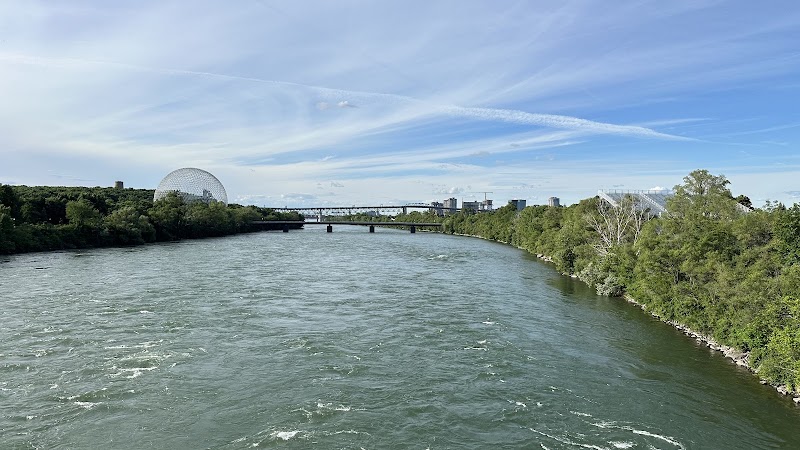
There is no other park like this one in Canada. Close to 270 hectares spread over two islands in the St. Lawrence River, one métro stop from downtown: Île Sainte-Hélène, natural, wooded, fortified since the nineteenth century, and Île Notre-Dame, entirely artificial, raised out of the river in ten months to host a world’s fair. Parc Jean-Drapeau is therefore all at once a green space, a military site, a museum of 1960s architecture, a Formula 1 circuit, a beach, an Olympic rowing basin and the stage for the city’s biggest music festivals. You can spend an hour here or a whole day, and you never see the same thing twice.
Highlights
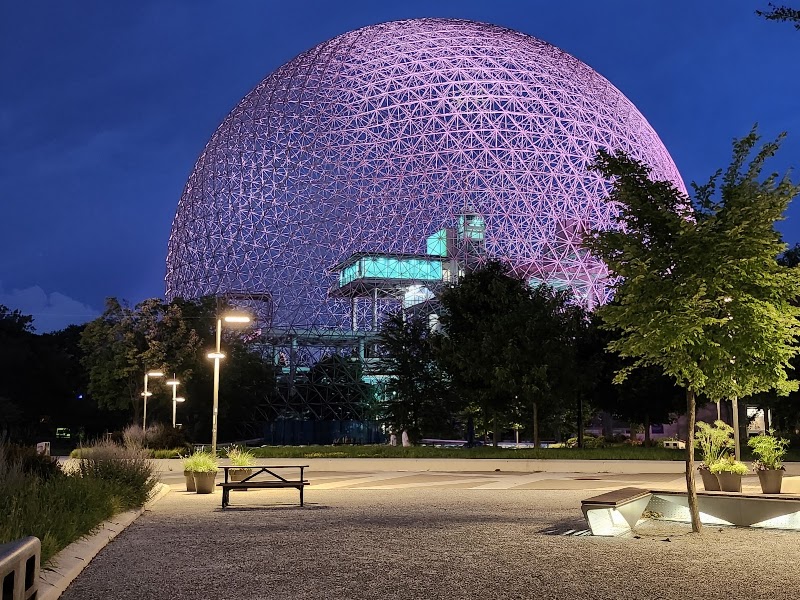
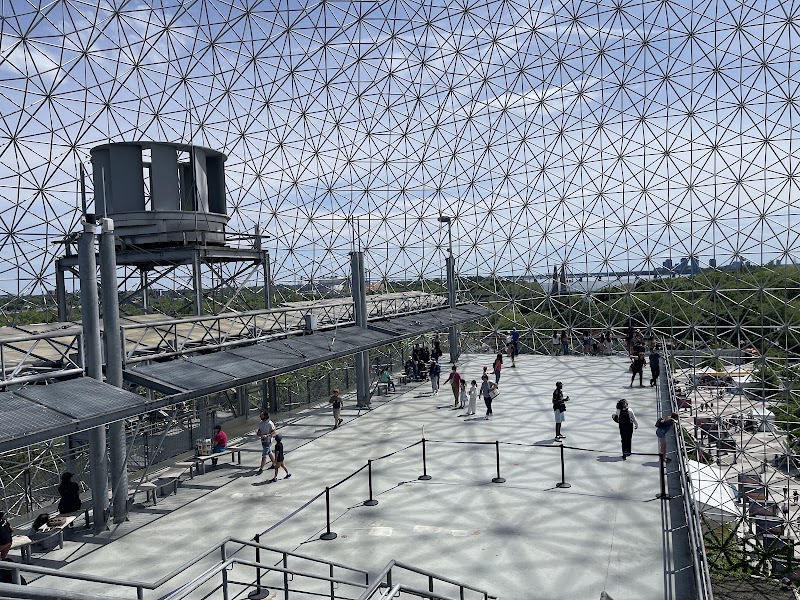
- The Biosphère — the former United States pavilion from Expo 67, a geodesic dome by Richard Buckminster Fuller measuring 76 metres across and 62 metres high; its acrylic skin burned on May 20, 1976 during maintenance work, the steel structure held, and the building became a museum of the environment in 1995 before joining Espace pour la vie in April 2021.
- Circuit Gilles-Villeneuve — 4.361 kilometres and 14 corners traced on Île Notre-Dame; the first Grand Prix was run here on October 8, 1978 in front of 72,000 spectators and won by Gilles Villeneuve himself. The last chicane is lined by the famous “Wall of Champions”, which caught Damon Hill, Michael Schumacher and Jacques Villeneuve on the same day in 1999.
- Jean-Doré Beach — built between September 1989 and June 1990 and opened in 1990: its water, drawn from the river, is filtered by some 120,000 aquatic plants spread across three marsh basins, with a flow-through time of more than two days, completed by sand filters and ultraviolet treatment. The swimming area can reach 15,000 square metres.
- The Olympic Basin — a legacy of the 1976 Games: 2,180 metres long, 110 metres wide, eight marked lanes and water sheltered from the wind. This is where women rowed Olympic events for the first time.
- The fort on Île Sainte-Hélène — a British arsenal built between 1820 and 1824, with its powder magazine and casemate, a link in the chain of defences raised after the War of 1812.
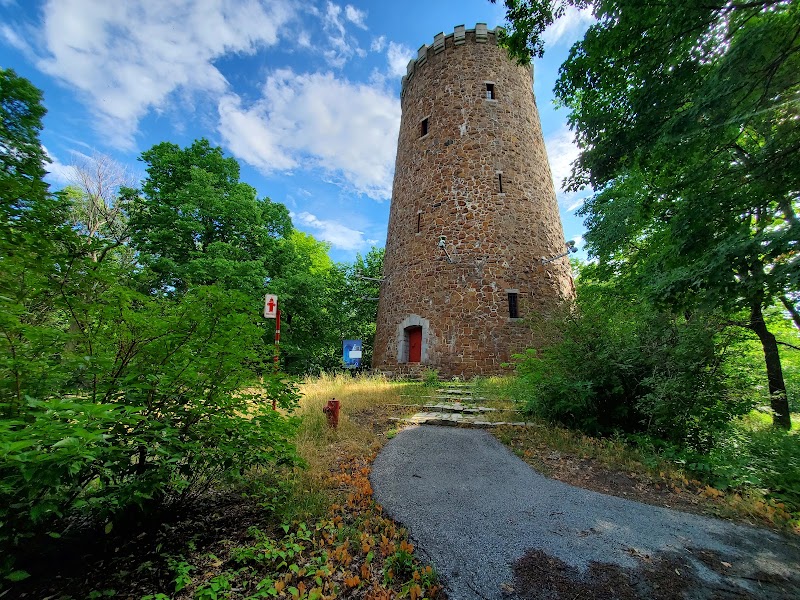
- The Lévis Tower — a water tower from 1936-1937 holding 4,500 hectolitres and standing some thirty metres high; an internal staircase of 157 steps leads to an observation terrace open onto the islands, the river, the city and the Montérégie.
What’s inside
The park reads as two very different halves. Île Sainte-Hélène is green, rolling and stony: breccia outcrops, big trees, military heritage, museums and festival stages. Île Notre-Dame is flat, aquatic and sporting: canals, gardens, rowing basin, race circuit and beach. Between the two, the river is always in sight, and that is what gives the site its very particular atmosphere.
- The gardens inherited from the 1980 Floralies internationales, which unfold over more than 25 hectares of planting that benefit from the microclimate created by the lagoons.
- La Ronde, opened in April 1967 as Expo 67’s entertainment sector and now Montreal’s big amusement park; it is home to Le Monstre, the tallest double-track wooden roller coaster in the world.
- The Casino de Montréal, installed since October 1993 in the former France and Quebec pavilions from Expo 67.
- Espace 67, the large outdoor amphitheatre built in 2019, host to Osheaga and îleSoniq among others.
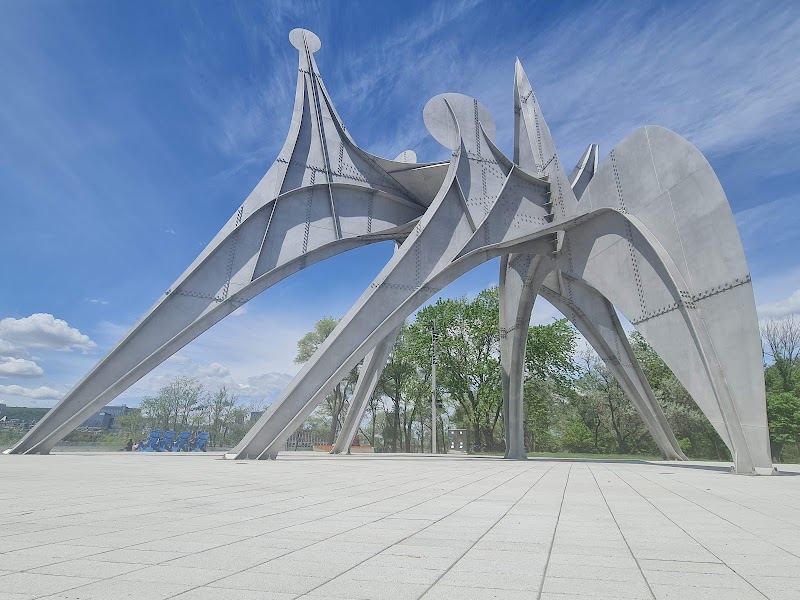
- Place des Nations, Expo 67’s ceremonial space, and “L’Homme” by Alexander Calder, a monumental sculpture from 1967.
- The aquatic complex, grassy beaches, trails, bike paths and the circuit itself, open to cyclists, runners and skaters outside race periods.
What to do and who it’s for
- Families — the beach in summer, the gardens, the aquatic complex and La Ronde: this is the Montreal park that fills an entire day without ever wearing children out.
- Architecture and design lovers — Expo 67 is still here, in outline and in relief: Fuller’s dome, the recycled pavilions, Place des Nations, the sculptures.
- Athletes — Circuit Gilles-Villeneuve doubles as a rolling loop outside race weekends, the Olympic Basin hosts rowing, canoe-kayak and dragon boats, and supervised open-water swimming is offered at the beach.
- Festival-goers — Espace 67 is the largest outdoor stage in the city: the big summer festivals set up here with downtown as a backdrop.
- History buffs — the fort of 1820-1824, the Lévis Tower and the memory of the Le Moyne seigneury tell two centuries of Montreal before anyone mentions a world’s fair.
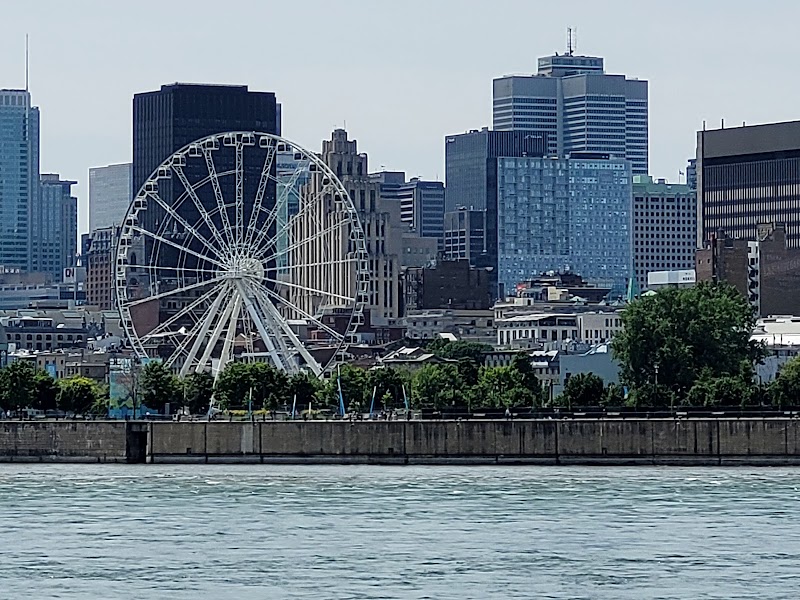
- Sunday strollers — going around the two islands on foot or by bike, with the river on one side and the skyline on the other, is still one of the finest urban walks in Quebec.
Getting there and practicalities
The park occupies two islands attached to the borough of Ville-Marie, and it is served by the métro’s yellow line: Jean-Drapeau station is a single stop from downtown, right in the heart of the site. It is the simplest and fastest way in, especially on event days, when car traffic is restricted. In summer a river shuttle links the islands to the Vieux-Port, and two bridges — the Jacques-Cartier Bridge and the Concorde Bridge — let you come over on foot or by bike from the city. Access to the park itself is free: the trails, the gardens, the lawns, the lookouts and the circuit outside race periods cost nothing. La Ronde, the Biosphère, the Casino and Jean-Doré Beach, on the other hand, are separate attractions with their own ticketing, as are the festivals presented at Espace 67. Hours vary from one sector to the next: the outdoor park is very widely accessible, but the museums, the beach and the amusement park follow their own seasons and opening hours, worth checking before you set out. Count on half a day for one island, a full day for both.
When to visit
Spring wakes the gardens and reopens the circuit to cyclists; it is the quietest season, and the light on the river is particularly sharp. Summer is high season without argument: the beach opens, the Olympic Basin fills with rowing shells and dragon boats, the Grand Prix and then the big festivals follow one after another, and the islands can take in tens of thousands of people in a single day — plan how you get around accordingly. Autumn may be the park’s best-kept secret: the gardens are still holding, the crowds are gone, the hardwoods on both islands turn russet and you can walk for hours without meeting many people. Montreal winter, finally, does not close the islands: snow covers the gardens and the lawns, the trails lend themselves to walking and snowshoeing, the frozen river frames the landscape, and the silence that settles over a site built for crowds is an experience in itself. It is also the season when the architecture shows best, once the trees are bare: the Biosphère’s dome cuts against the sky exactly as it did on day one.
Worth knowing
The park’s history begins well before the world’s fair. In 1611, Samuel de Champlain named the larger of the islands “isle de saincte Elaine”, after his wife Hélène Boullé. From 1665 to 1818 the island belonged to the Le Moyne de Longueuil seigneury; the British government bought it in 1818, after the War of 1812, and between 1820 and 1824 built a fort there with an arsenal, a powder magazine and a casemate. Canada became the owner in 1870 and the island opened to the public as a park as early as 1874. The opening of the Jacques-Cartier Bridge in 1930 finally made it reachable on foot and by car, and the landscape architect Frederick Todd redesigned the surroundings in the wake of that, notably with a bathers’ pavilion that became today’s aquatic complex. In 1936-1937 the Lévis Tower went up, a water tower of 4,500 hectolitres, and in 1955 the philanthropist David M. Stewart founded a history museum in the fort’s arsenal whose collection would grow to nearly 27,000 objects, archival documents and rare books; the Stewart Museum closed in 2021 and its collection went to the McCord Stewart Museum. Then came the great pivot: to host the 1967 World’s Fair, Montreal considerably enlarged Île Sainte-Hélène and created Île Notre-Dame from nothing, raised in ten months in 1965 out of rock excavated during the digging of the métro, topped up with dredged material from the river and quarry stone — the largest construction project ever carried out in Quebec in so short a span. Expo 67 opened on April 28, 1967, closed on October 29 and drew more than fifty million visits, with around sixty participating nations. After the fair, the site reinvented itself in successive layers: La Ronde stayed on as an amusement park, the Olympic Basin was built for the 1976 Games, the racing circuit hosted its first Grand Prix in 1978, the Floralies internationales left their gardens behind in 1980, the Casino moved into the France and Quebec pavilions in 1993, the beach opened in 1990 and the Biosphère was reborn as a museum in 1995. In 1999 the whole took the name Parc Jean-Drapeau, in tribute to the mayor who had carried both Expo 67 and the Olympic Games.
Visitor tips
- Come by métro or by bike, especially on event weekends: car access to the islands is limited and parking runs out very fast.
- Do Île Sainte-Hélène in the morning, when the light hits downtown as seen from the lookouts, and Île Notre-Dame in the afternoon, when the gardens and the basin are at their best.
- Check the calendar before you set out: on Grand Prix and major festival days some sectors are fenced off and the “free” park shrinks considerably.
Questions and answers
Is there an admission charge for the park? No. Access to Parc Jean-Drapeau — trails, gardens, lawns, lookouts, riverbanks — is free. La Ronde, the Biosphère, the Casino and Jean-Doré Beach, on the other hand, are separate attractions with their own ticketing, as are the Espace 67 festivals.
How do you get there from downtown? By the métro’s yellow line: Jean-Drapeau station is one stop from downtown and comes out directly in the park. In summer there is also a river shuttle from the Vieux-Port, and two bridges allow access on foot or by bike.
Can you swim? Yes, at Jean-Doré Beach, open during the summer season. Its water comes from the river and is filtered by about 120,000 aquatic plants spread across three marsh basins, then by sand filters and ultraviolet treatment; the swimming area can reach 15,000 square metres. It is a service separate from the park, with its own conditions of access.
Can you ride on Circuit Gilles-Villeneuve? Yes, outside competition and setup periods: the 4.361-kilometre, 14-corner layout then serves as a public loop for cyclists, runners and skaters.
What is actually left of Expo 67? Far more than people think: Buckminster Fuller’s Biosphère, Place des Nations, the France and Quebec pavilions turned into the Casino, La Ronde, Alexander Calder’s sculpture “L’Homme”, and Île Notre-Dame itself, which did not exist before 1965.
Can you visit the Biosphère? Yes. Since 1995 the dome has housed a museum devoted to the environment, part of the Espace pour la vie network since April 2021. It is a paid visit, separate from access to the park.
Is the park worth the trip in winter? Yes, for reasons opposite to summer’s: the islands are silent, the snowy trails lend themselves to walking and snowshoeing, the frozen river completely changes the landscape, and the architecture of Expo 67 reads far better without foliage.
How much time should I allow? Half a day for a single island, a full day for both. Add a whole day if you are coming for La Ronde or for a festival.
Photos
Show 1 more photos
Visitor reviews
Reviews last updated: 2026-08-04 15:54:42
Data is refreshed monthly. Sources: montreal-name.com and editorial picks based on reviews.
Цей парк ЧУДОВИЙ!
Коли ви виходите зі станції, ви потрапляєте в головну зону, де розташований глобус. У цій зоні є доглянуті туалети, ресторан, гарна скульптура, а також станція для самокатів. Я дуже рекомендую вам заван…
Дуже великий і гарний парк з чудовими краєвидами на місто та гавань. Вони провели багато реконструкцій, щоб оновити інфраструктуру парку, будівлі та ландшафтні елементи.
Я однозначно рекомендую приїжджати сюди в будні д…
Гарний острів є де погуляти і посидіти на пікніку))
Великий парк , багато зон для проведення часу, басейн, оглядові майданчики