

Park · Montreal · ⭐ 9.5/10 · 2913 reviews · updated: 2026-08-04 15:54:45
Address: 398 Chem. du Canal, Lachine, QC H8S 4G2, Канада
Parc René-Lévesque — a peninsula gallery between Lac Saint-Louis and the Lachine Canal
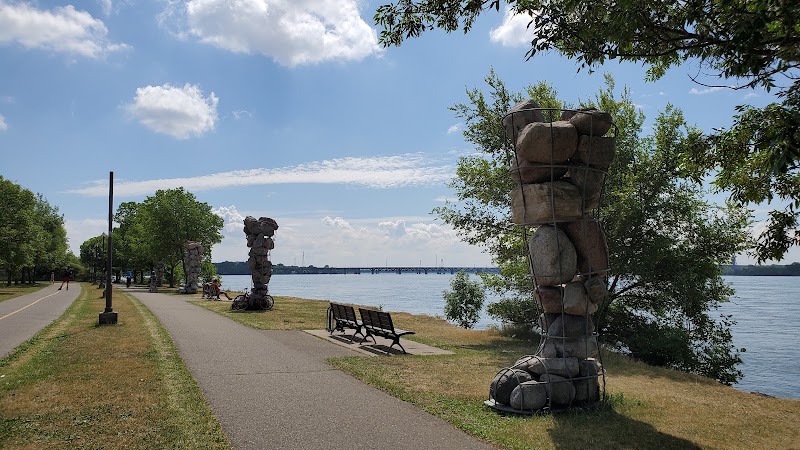
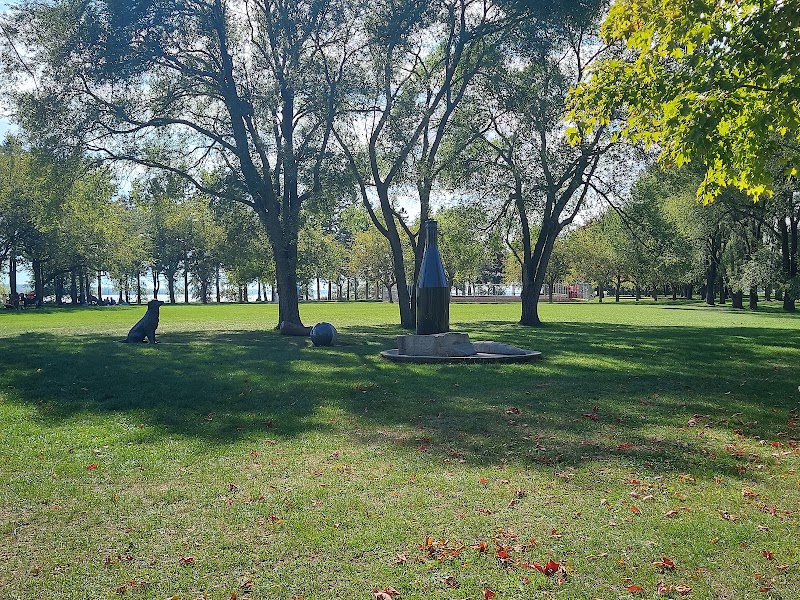
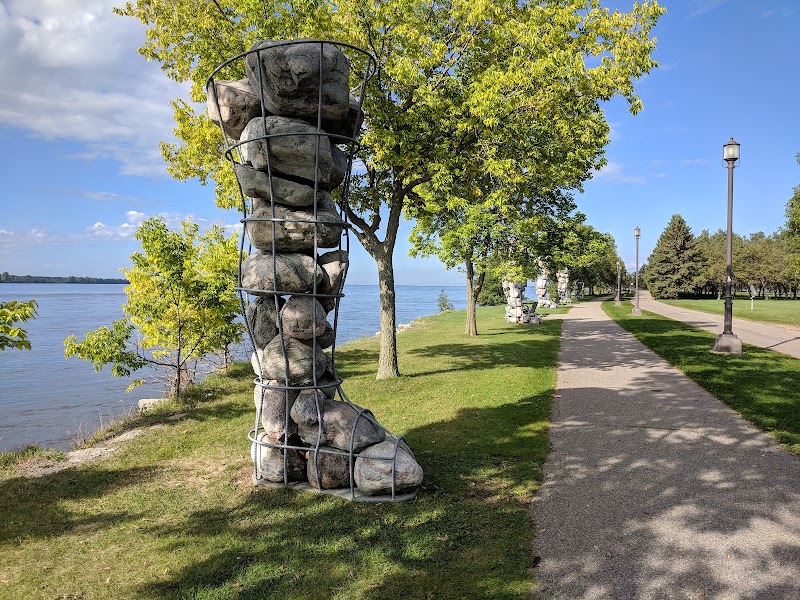
Picture a narrow tongue of land, nearly two kilometres long, reaching out into Lac Saint-Louis with water on both sides — and, every fifty metres or so, a monumental sculpture planted in the grass. This is Parc René-Lévesque, in Lachine: waterfront promenade, arboretum, bike path and one of the largest contemporary sculpture gardens in Canada all at once. The wind blows here almost constantly, the sunsets are legendary, and the art is freely accessible, with no glass and no rope.
Highlights
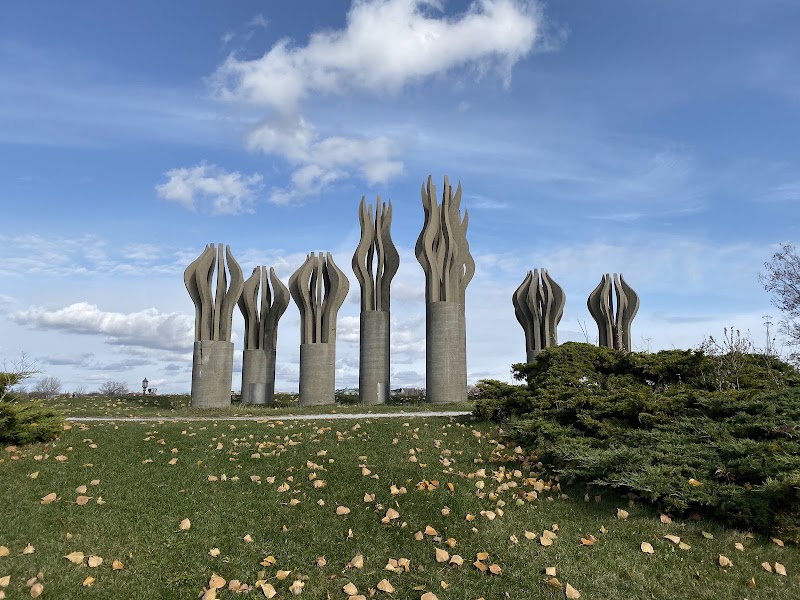
- The Musée plein air de Lachine — a collection of some fifty works spread over three sectors, about twenty of them planted in the park itself: one of the country’s most important ensembles of outdoor contemporary sculpture.
- Hommage à René Lévesque by Robert Roussil — installed in 1988, the work that gives the park its symbolic anchor.
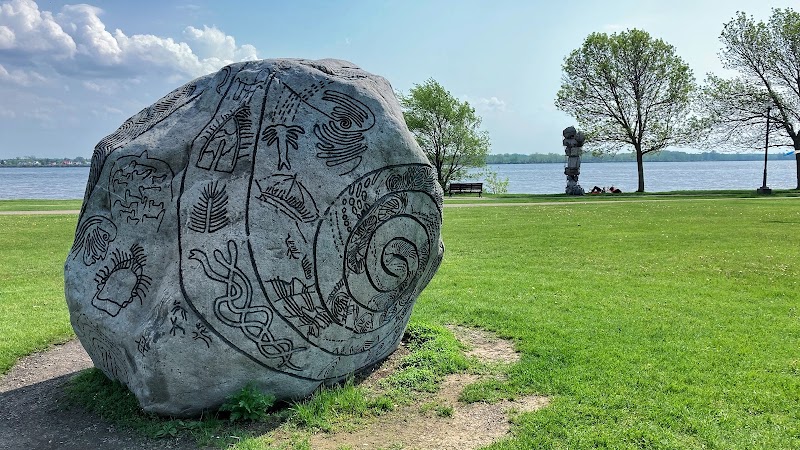
- Story Rock and Vortexit II by Bill Vazan — two interventions by the same artist, made more than twenty years apart (1986 and 2009), both working with engraved stone.
- The 2 km bike loop — an almost flat ring around the peninsula, connected to the Lachine Canal bike network.
- The arboretum — created in 1989 and holding some seventy tree species, renewed in the autumn of 2025 with the planting of nearly 540 trees.
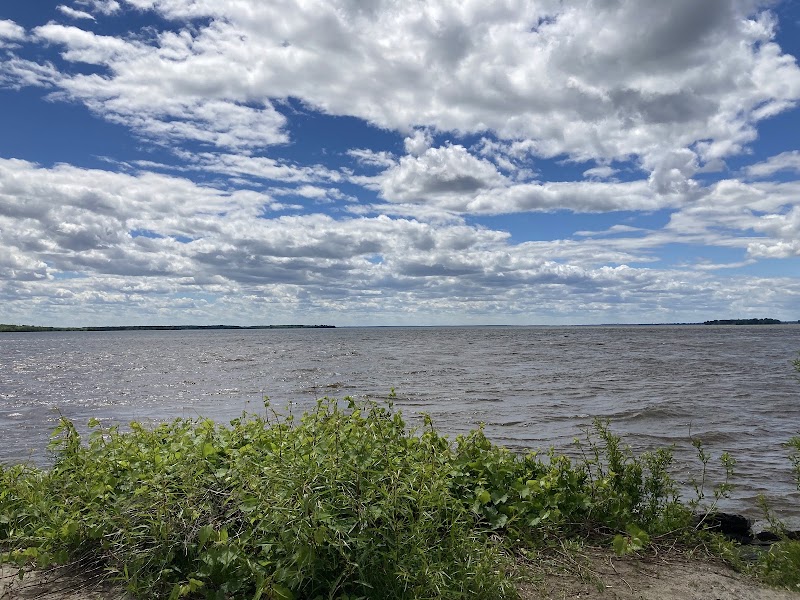
- The panorama over the water — open views of Lachine Bay, Lac Saint-Louis and, in the distance, part of the Lachine Rapids.
What’s inside
The park is essentially a promenade: you come in at the base of the peninsula, follow the ring, and come back out at the same place. Because the strip of land is narrow, the water stays in view almost constantly on both sides, and the sculptures reveal themselves one after another rather than all at once.
- Some twenty monumental sculptures installed in the open air, freely accessible at all times.
- A bike loop of about 2 km, connected to the Lachine Canal path.
- An arboretum planted with varied species, with recent plantings meant to strengthen biodiversity.
- Picnic areas, benches facing the water, a drinking fountain and bike racks.
- Washrooms open in season — they close in winter.
- Direct access to the La Riveraine cross-country ski network, groomed over more than twenty kilometres linking several parks in the southwest of Montreal.
What to do and who it’s for
- Contemporary art lovers — a collection of monumental sculpture seen without a ticket, without opening hours and without a gallery room: a museum whose ceiling is the sky.
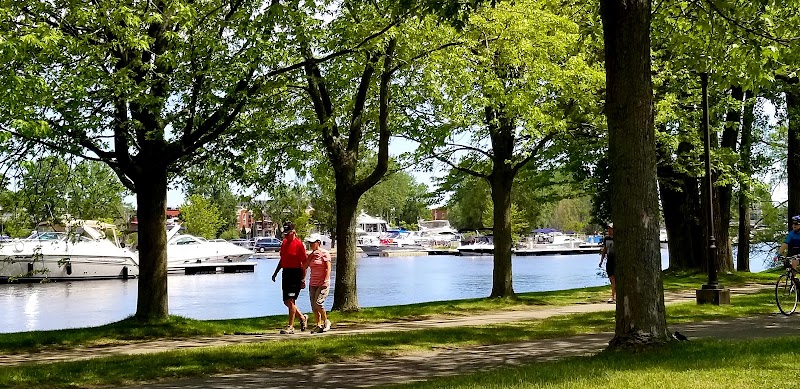
- Cyclists — the park’s loop folds naturally into an outing on the Lachine Canal path, one of the busiest cycling routes in Quebec.
- Sunset photographers — the peninsula’s westward orientation over Lac Saint-Louis makes it one of the best spots in the city at the end of the day.
- Birders — Lac Saint-Louis is a stopover for waterfowl, and the point lets you scan open water through 180 degrees.
- Families and walkers — a flat, short route with no car traffic, and artworks that give children a reason to keep walking.
- Cross-country skiers — the park is an access point to the La Riveraine trail, which links several waterfront parks in winter.
Getting there and practicalities
The park is in the borough of Lachine, in the southwest of the island. By transit, take the métro’s green line to Angrignon station, then the 110 bus westbound; route 195 also serves the area. By bike, the park connects directly to the Lachine Canal bike path, which makes it a natural destination from downtown. Access to the park and to the works is entirely free and the park is open every day from 6 a.m. to 11 p.m. Parking is charged separately. Count on an hour for the loop on foot with stops in front of the sculptures, two hours if you take the time to read the labels and sit facing the water.
When to visit
In spring the ice breakup on Lac Saint-Louis and the return of the migrating birds bring the point to life, and the sculptures stand out sharply against a still-bare landscape. Summer is the season of picnics, cycling and long evenings: the sun sets late and the ring stays busy until nightfall. Autumn is the arboretum’s moment, when the species planted since 1989 change colour just as the light softens over the water. Winter is nothing like a dead season here: the park opens onto the La Riveraine cross-country ski network, ice takes hold on the lake, and the sculptures, dusted with snow, take on a completely different look. Be aware, though, that the wind bites on the peninsula in January and that the washrooms are closed during the cold season.
Worth knowing
There is nothing natural about this ground: the jetty was created in 1883 during a late enlargement of the Lachine Canal, and then served for a long time as a dumping ground for dredging spoil. It was under Lachine mayor Guy Descary that this former marine dump was turned into a large public park, starting in the early 1980s; the place first carried the name parc de la Grande-Jetée. Today it honours René Lévesque (1922-1987), journalist, founder of the Parti québécois in 1968 and twenty-third premier of Quebec from 1976 to 1985, designated a historic figure by Quebec in 2012; the name was made official on October 7, 2021. The sculpture collection was assembled in waves: at the sculpture symposiums of 1985, 1986 and 1988, then at the Montreal international outdoor sculpture salons of 1992 and 1994. Among the works are La pierre et le feu by Jean-Pierre Morin (1985), Hermès by Graham Cantieni, La ville blanche by André Fournelle, Signal pour Takis by Pierre Leblanc, Le phare d’Archimède by Dominique Rolland and From A by Takera Narita (all from 1986), Vire au vent by Gilles Boisvert, China Wall by Jean-Marie Delavalle, Écluses by Octavian Olariu, Les cariatides by Dominique Valade and Cheval à plume by Miroslav Frederik Maler (1988), Les voûtes d’Ulysse by Guy Nadeau and The Passing Song by Catherine Widgery (1992), as well as Site/interlude by David Moore and Explorer by Mark Prent (1994). The arboretum, for its part, was created in 1989.
Visitor tips
- Do the loop at the end of the day: the raking light on Lac Saint-Louis brings out the volumes of the sculptures, and the sunset is the highlight of the visit.
- Dress more warmly than you would for the rest of the city: the peninsula is exposed and the wind off the lake drops the felt temperature in every season.
- Combine the visit with a bike outing on the Lachine Canal path — the park is its logical end point on the western side.
Questions and answers
How many sculptures are there in the park? Some twenty monumental works are installed in Parc René-Lévesque itself. They are part of the collection of the Musée plein air de Lachine, which holds around fifty works spread over three sectors of the borough.
Do you have to pay to see the works? No. The park and its collection are open and free at all times, with no ticketing. Only parking is charged.
Which works can you see? Among the best known: Hommage à René Lévesque by Robert Roussil (1988), Story Rock (1986) and Vortexit II (2009) by Bill Vazan, La pierre et le feu by Jean-Pierre Morin (1985), Écluses by Octavian Olariu (1988), Les voûtes d’Ulysse by Guy Nadeau (1992) and Explorer by Mark Prent (1994).
Why is the park named after René Lévesque? In honour of René Lévesque (1922-1987), founder of the Parti québécois in 1968 and premier of Quebec from 1976 to 1985. The name was made official on October 7, 2021; the place was previously called parc de la Grande-Jetée.
How do you get there by transit? Green line métro to Angrignon station, then the 110 bus westbound. Route 195 also serves the area.
Can you bike there from downtown? Yes. The park connects directly to the Lachine Canal bike path, which makes it one of the easiest cycling destinations from central Montreal.
What is there to do here in winter? Walk the snow-covered peninsula, see the sculptures under snow and get onto the La Riveraine cross-country ski network, groomed over more than twenty kilometres linking several parks in the southwest. The washrooms are closed in winter.
Is the park stroller-friendly? Yes. The route is flat, the ring is paved and there is no car traffic inside the park.
Photos
Show 1 more photos
Visitor reviews
Reviews last updated: 2026-08-04 15:54:45
Data is refreshed monthly. Sources: montreal-name.com and editorial picks based on reviews.
Це приголомшливий та тихий парк, що пропонує захоплюючі краєвиди та ідеальне поєднання природи та мистецтва. Розташований на вузькому півострові, що впадає в річку Святого Лаврентія, парк пропонує мальовничі краєвиди на…
Гарний парк! Цей парк розташований на краю півострова. Він невеликий, можна пройти весь парк (починаючи з правої стежки та повертаючись лівою) приблизно за 30 хвилин, але його все одно варто відвідати! Протягом усієї сте…
Рівна стежка приблизно 2,2 км, петля. Легко знайти паркування вранці в будній день. Помірна ціна за паркування, близько 2,25 доларів за годину. По всьому парку розкидані цікаві витвори мистецтва. Собаки на повідку дозвол…
Я поїхав туди з родиною дуже теплого вересневого дня. Шкода, що не відкрив це місце багато років тому. Це чудове місце для пікніка. Шкода лише, що біля входу немає справжніх туалетів, а не портативного туалету. З одного…
Гарний парк! Прекрасні краєвиди, оточений водою. Портативні туалети та магазин морозива біля входу. Чудово підходить для сімейних пікніків, люди всюди готували барбекю та відпочивали. Здається, що вони також постачають б…