

Park · Montreal · ⭐ 9.3/10 · 3743 reviews · updated: 2026-08-04 15:54:44
Address: 2425 Boul. Gouin E, Montréal, QC H2B 2P5, Канада
Parc-nature de l’Île-de-la-Visitation — three centuries of mills on the Rivière des Prairies
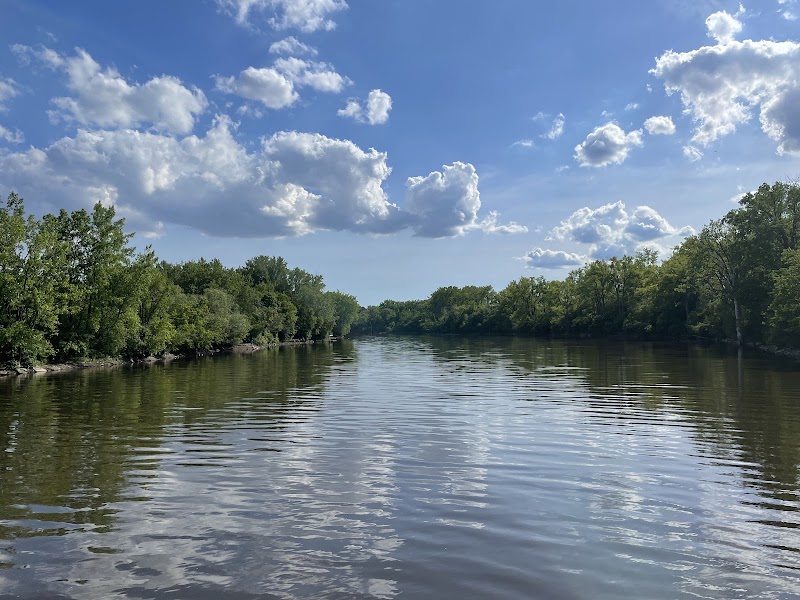
This is the most urban of Montreal’s nature parks, and paradoxically one of the richest in history. Thirty-four hectares stretched out like a ribbon along the Rivière des Prairies, with an island in the middle, the ruins of mills three centuries old, a hydroelectric dam in the middle of the city and one of the best vantage points on the island for watching fish-eating birds. You come for an hour’s walk and leave having crossed the French Regime, the industrial revolution and the electrification of Quebec.
Highlights
- The Site des Moulins — the remains of the milling complex at Sault-au-Récollet, whose origins go back to 1724-1726, when the engineer Simon Sicard built the dike and a sawmill near the island.
- The Maison du Pressoir — a building from 1806 connected with cider pressing, today an interpretation site for the neighbourhood’s heritage.
- The Maison du Meunier — the former miller’s house, converted into a welcome centre with a café, a couple of steps from the ruins.
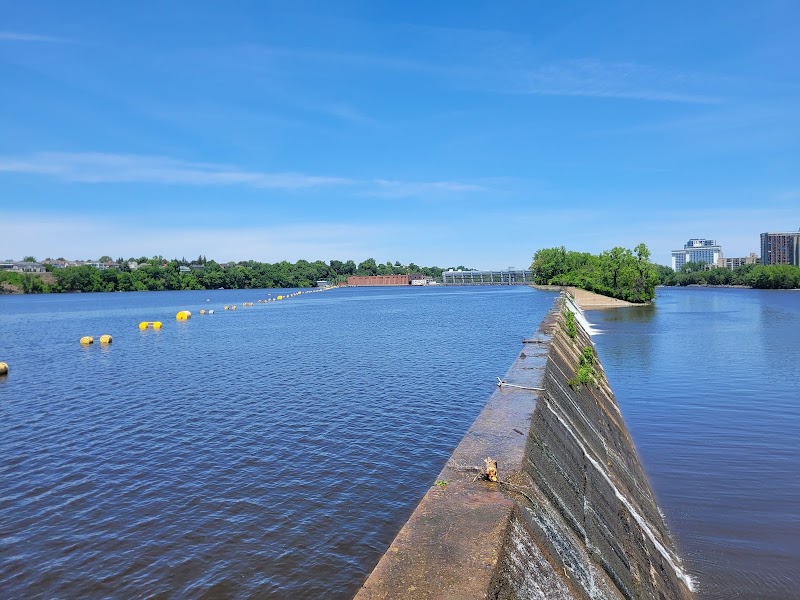
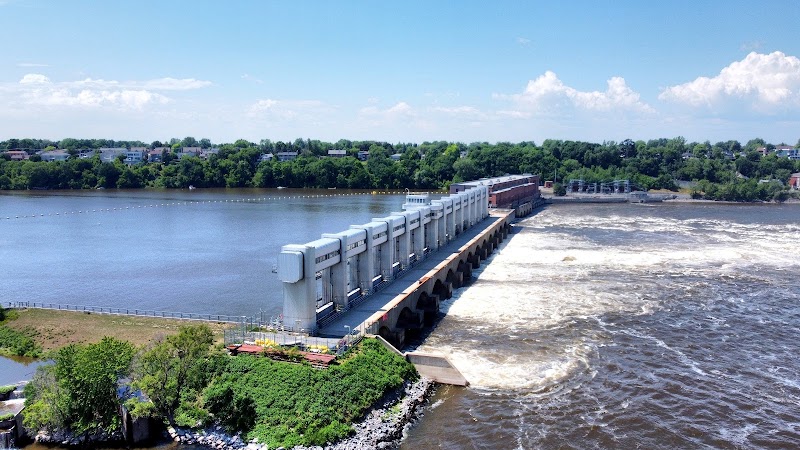
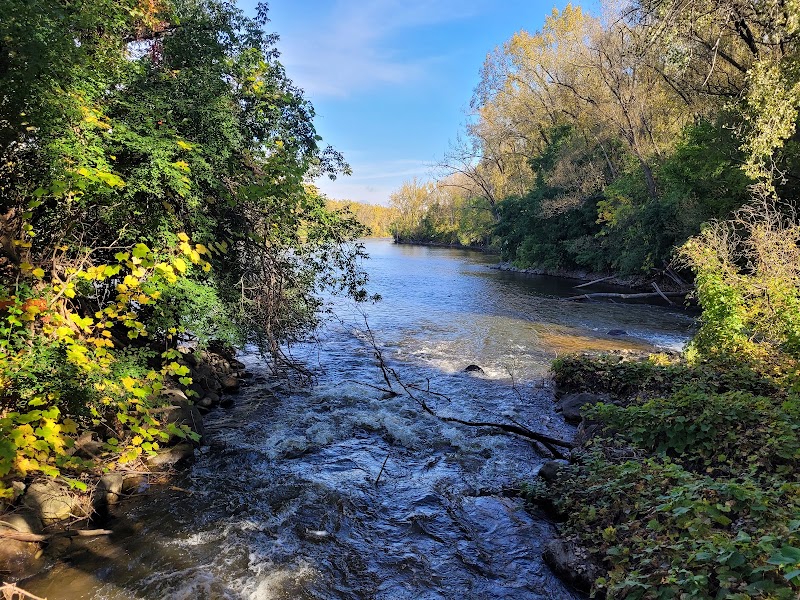
- The Rivière-des-Prairies generating station dam — commissioned in 1929, with an installed capacity of 45 MW; its lookouts give the best views over the fast water.
- The black-crowned night heron — the park’s emblem bird, present from mid-April to mid-October; the site is one of the best in Montreal for watching fish-eating birds, the great blue heron included.
- Île de la Visitation itself — a wooded island reached by footbridges, with trails that follow the water almost everywhere.
What’s inside
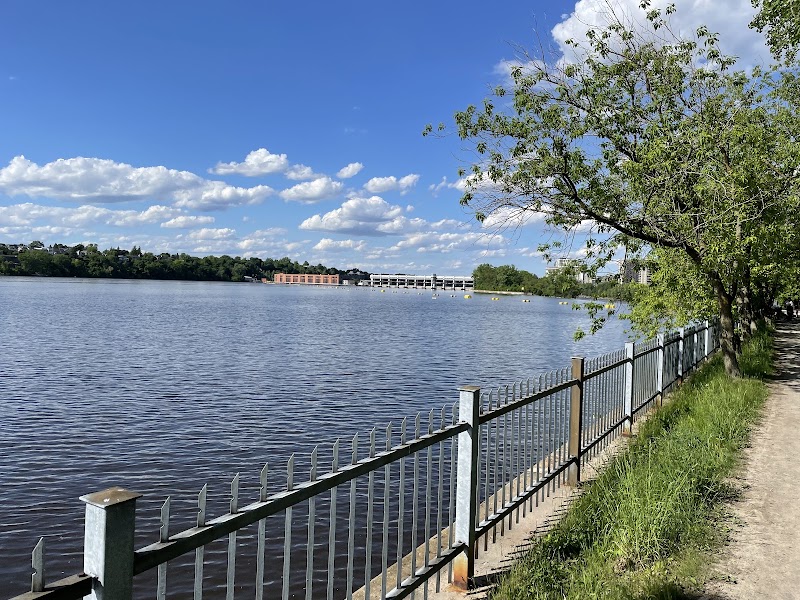
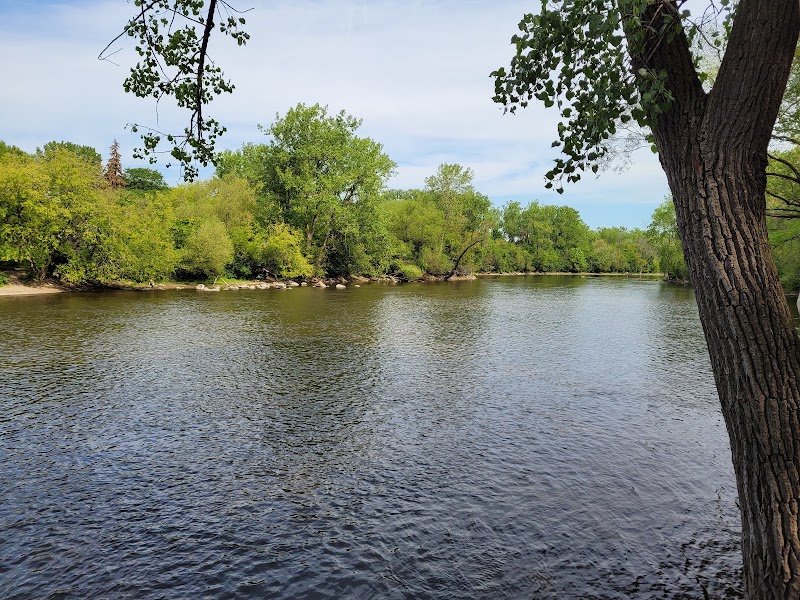
The park is linear: it hugs the shore for several kilometres, so you never lose sight of the water. The trail network is flat, well marked and usable in all seasons, and the heritage points of interest are spread along the route rather than concentrated in one spot.
- About 8.8 km of easy walking trails, doubled by cycling routes.
- The ruins of the old mills and the two heritage houses, open in season.
- Lookouts over the river and over the dam’s installations.
- A café and picnic areas near the welcome sector.
- A winter network: three cross-country ski trails — L’Écureuil (3.6 km), Le Lapin (2.7 km) and La Tortue (1.3 km) — plus a snowshoe trail of about 2.1 km and a sliding hill.
- A bike repair station, bike racks, drinking fountains and accessible washrooms.
What to do and who it’s for
- Amateur birders — hundreds of species are observed here over the course of the year: night herons, great blue herons, ducks, woodpeckers — black-backed, downy, pileated — and even the peregrine falcon.
- History lovers — three hundred years of the milling industry legible in the landscape, from the eighteenth-century seigneurial dam to the twentieth-century generating station.
- Sunday walkers and cyclists — a flat, short route with no notable climbing, ideal for a two-hour outing reachable by métro and bus.
- Families — the sliding hill in winter, the footbridges and water visible everywhere keep children alert without demanding long distances.
- Beginner cross-country skiers — three short, easy trails, with equipment rental available in season, perfect for a first attempt.
- Anglers — the Rivière des Prairies is popular with line fishers, in accordance with the provincial regulations in force.
Getting there and practicalities
The park is in the borough of Ahuntsic-Cartierville, in the north end of the island, on the edge of Montréal-Nord. By transit, take the métro’s orange line to Henri-Bourassa station, then the 69 bus eastbound: the connection is direct and frequent. Access to the park is free; parking, winter equipment rental and certain interpretation activities are charged separately. The park is open every day from 7 a.m. to 10 p.m., though the parking lot may close earlier. Allow two hours for a full loop with stops at the heritage site, half a day if you add birdwatching or a visit to the houses.
When to visit
Spring is spectacular: the ice breakup, the strong flow of the river and the return of the black-crowned night heron in mid-April make May the ideal month for birding. Summer offers the continuous shade of the riverbank forest cover, a real coolness compared with the rest of the city, and full access to the heritage houses. Autumn colours the shore yellow and red and empties the trails — it is the best season for photographing the ruins and the dam. Winter turns the park into a small nordic domain: three groomed cross-country trails, a snowshoe trail, a sliding hill and the river partly frozen below the lookouts. Because the distances are short and the trails flat, this is one of the easiest parks to use in deep cold.
Worth knowing
The area’s name goes back to a tragedy: on June 25, 1625, the Recollet missionary Nicolas Viel and his young companion, nicknamed Ahuntsic, drowned in the rapids of the Rivière des Prairies. The place became Sault-au-Récollet — and Ahuntsic would later give his name to the borough. The Sulpicians moved their mission here and built their seigneurial mills; the Église de la Visitation, built of fieldstone between 1749 and 1751, is the oldest church still standing on the island of Montreal. The milling activity ran on across the centuries: between 1724 and 1726, Simon Sicard built the dike and a sawmill, followed by a seigneurial grist mill and a wool carding mill; a nail works, more sawmills and a paper mill were added later, and production only stopped for good in 1977. In the twentieth century the Back River Power Company obtained the water rights; the generating station came into service in 1929 and the works were completed in the early 1930s, raising the water level and submerging the Gros-Sault rapids. The station passed to Hydro-Québec with the nationalization of Montreal Light, Heat and Power on April 15, 1944. The park itself was laid out in 1984, in the wake of the natural-space acquisition programme launched in 1979 by the Montreal Urban Community; the designation “nature parks” officially replaced “regional parks” on March 24, 1994.
Visitor tips
- For birds, come early in the morning between mid-April and mid-October, and post yourself at the lookouts near the dam: that is where the feathered fishers concentrate.
- Check the opening hours of the heritage houses before you set out: they are seasonal and more restricted than the park’s own.
- The banks near the fast water stay slippery all year — stay on the marked trails, particularly in spring and in winter.
Questions and answers
Why is the area called Sault-au-Récollet? Because of the drowning, on June 25, 1625, of the Recollet Nicolas Viel and his companion Ahuntsic in the rapids of the Rivière des Prairies. The name Ahuntsic was later given to the borough.
Can you still see the mills? You can see the remains of the milling complex, along with two preserved heritage buildings: the Maison du Meunier and the Maison du Pressoir, the latter dating from 1806.
Which birds can you watch? The black-crowned night heron is the star species, present from mid-April to mid-October. You also see the great blue heron, various ducks, several woodpecker species, chickadees and, occasionally, the peregrine falcon.
Are there beavers in the park? The riverbank corridor shelters shoreline wildlife, and it is not unusual to spot gnawed trunks along the water. The fish-eating birds remain the most reliable wildlife attraction on the site, however.
How do you get there without a car? Orange line métro to Henri-Bourassa, then the 69 bus. The trip is direct and the park is reachable in under an hour from downtown.
What is there to do here in winter? Cross-country skiing on three groomed trails (L’Écureuil, Le Lapin, La Tortue), snowshoeing, sliding on the hill and winter hiking. Equipment can be rented on site in season.
Is admission free? Yes, access to the park is free. Parking, equipment rentals and certain guided activities are billed separately.
Is the park suitable for strollers? Yes. The main trails are flat and well maintained, accessible washrooms and reserved parking are provided, and the elevation change is negligible.
Photos
Show 1 more photos
Visitor reviews
Reviews last updated: 2026-08-04 15:54:44
Data is refreshed monthly. Sources: montreal-name.com and editorial picks based on reviews.
Цей парк є чудовим місцем для різноманітних заходів, прогулянок, пробіжок, їзди на велосипеді, пікніків або коли ви просто хочете вигуляти собаку. Доріжки розслабляють, особливо завдяки дзюрчанню води, що тече біля бістр…
Відвідайте цей природний парк для ідеального відпочинку на вихідних з друзями! Насолоджуйтесь численними місцями для барбекю, чистими туалетами та захоплюючими краєвидами морського узбережжя та пляжу. Ідеальне місце, щоб…
Красивий, довгий, затінений парк, який слідує за течією Рив’єр-де-Прері. З нього відкривається прекрасний вид на дамбу гідроелектростанції. Вздовж доріжки розташовані фонтани, лавки, місця відпочинку, місця для пікніка.…
Цей парк пропонує дуже приємну та освіжаючу прогулянку вздовж води. Пішохідні та велосипедні доріжки чудові.
А вздовж стежок нерідко можна побачити, наприклад, канадських гусей.